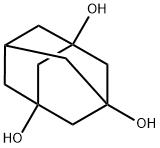
1,3,5-Adamantanetriol (CAS No. 99181-50-7) is a high-performance polycarbocyclic bridgehead triol that serves as a critical building block in the semiconductor and fine chemical industries. Belonging to the diamondoid family, its rigid 3D structure and trifunctional hydroxyl groups make it indispensable for the development of advanced electronic materials, particularly in the next generation of photolithography.
Physical and Chemical Properties
The molecule is characterized by a tricyclo[3.3.1.1(3,7)]decane framework with hydroxyl groups substituted at the 1, 3, and 5 tertiary carbon positions.
- Structural Profile: It possesses a highly symmetric, rigid, and strain-free "cage" structure resembling the crystal lattice of a diamond
- Reactivity: The three hydroxyl groups are located at bridgehead positions, which allows for precise poly-functionalization. This symmetry facilitates the creation of highly cross-linked networks.
- Stability: Due to the inherent stability of the adamantane cage, the compound exhibits exceptional thermal stability (Td > 400°C)when incorporated into polymers) and mechanical rigidity
- Transparency: Its aliphatic nature ensures high transparency at deep ultraviolet (DUV) and extreme ultraviolet (EUV) wavelengths, specifically at 193 nm, where aromatic compounds typically fail due to high absorbance.
Industrial Applications in Semiconductors
1,3,5-Adamantanetriol is primarily utilized as a precursor or additive in Electronic Chemicals, specifically within the Photoresist Industry.
- Photoresist Matrix and Resin Development
In modern photolithography, particularly for 193 nm (ArF) and EUV processes, adamantane derivatives are used to synthesize photosensitive resins. 1,3,5-Adamantanetriol acts as a core for "Molecular Glass" photoresists .
- Etch Resistance: The rigid carbon cage significantly enhances the plasma etch resistance of the resist film, protecting the underlying silicon wafer during the reactive ion etching (RIE) process.
- Resolution and LER: Its small molecular size compared to traditional polymers helps in achieving higher resolution (down to 20 nm) and reducing Line Edge Roughness.
- Low-k Dielectric Materials
The semiconductor industry uses this compound to develop low-dielectric constant (low-k) insulators.
- Free Volume: The bulky adamantyl group increases the "free volume" within a polymer matrix, effectively lowering the dielectric constant ($k \approx 2.50$) and dielectric loss (Liu et al., 2014).
- Interconnects: It is used in the synthesis of adamantyl-based BCB (benzocyclobutene) polymers for advanced electronic packaging and interlayer dielectrics.
Industrial Synthesis Overview
While adamantane is chemically stable and difficult to functionalize at non-activated carbons, 1,3,5-Adamantanetriol is produced through advanced oxidation processes:
- Catalytic Oxidation: High-yield synthesis often involves one-stage catalytic oxidation of adamantane using hydrogen peroxide and copper-based or cobalt catalysts.
- Biotransformation: Recent industrial research explores biocatalytic pathways using microorganisms like Wolfiporia cocos or specific bacteria to achieve high regioselectivity at the tertiary C-H bonds.
Summary of Key Specifications
| Feature | Industrial Benefit |
| Bridgehead Trifunctionality | Enables high-density cross-linking for thermal stability. |
| Diamond-like Rigidity | Improves etch resistance in plasma environments. |
| Aliphatic Structure | Lowers UV absorbance, enabling finer lithographic patterns. |
| High Symmetry | Ensures uniform film-forming properties in electronic coatings. |
Product:99181-50-7, Semiconductor Photoresist, Electronic Chemicals
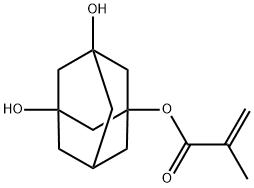
![1242906-47-3,2-Propenoic acid, 2-methyl-, 3,5-bis[(2,2,2-trifluoroacetyl)oxy]tricyclo[3.3.1.13,7]dec-1-yl ester](https://www.pudeepharm.com/wp-content/uploads/2026/05/473.jpg)