Product Description
Introduction
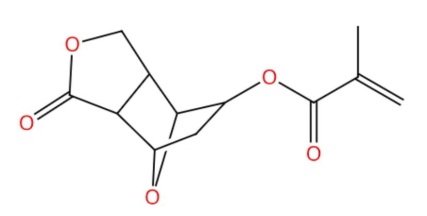
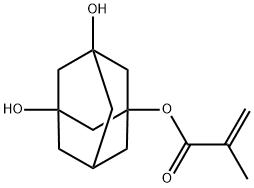
The compound (CAS No.115522-15-1) is a specialty chemical primarily used as a functional intermediate in the production of photoresists, a key component in photolithography processes. Photolithography is central to semiconductor fabrication, enabling the precise patterning of micro- and nanoscale structures on silicon wafers. As a precursor in photoresist formulations. This compound plays a crucial role in defining the performance, resolution, and sensitivity of these materials.
Chemical Role and Characteristics
Its chemical structure provides valuable properties for photolithography chemistry. Typically, compounds of this type serve as monomers, crosslinkers, or photosensitive functional groups that can undergo polymerization or photochemical reactions under UV exposure. These reactions allow the photoresist to selectively dissolve in developers, creating fine patterns on the wafer surface.
Applications in Photolithography
Positive and Negative Photoresists: the compound is often incorporated into both positive and negative photoresist formulations to improve adhesion, resolution, and etch resistance.
Advanced Semiconductor Devices: The compound is relevant for high-resolution patterning in advanced integrated circuits (ICs), including logic chips and memory devices, where nanoscale precision is critical.
Microelectromechanical Systems (MEMS): In MEMS fabrication, the compound helps form durable microstructures that require high fidelity and dimensional stability.
Optoelectronics: the compound can also contribute to the development of micro-patterned optoelectronic components, including LEDs and photodetectors.
Advantages
High Sensitivity: Its functional groups enable efficient photoinduced reactions, improving photoresist responsiveness.
Compatibility: Can be formulated with a variety of polymer backbones and solvents used in modern photolithography.
Pattern Precision: Enhances fine-line resolution and edge definition, critical for semiconductor miniaturization.
Conclusion
The compound (CAS No.115522-15-1) is a specialized chemical intermediate with significant utility in the photolithography industry.Its role in photoresist formulations is essential for producing high-performance micro- and nanoscale devices. As semiconductor technology continues to advance toward smaller nodes, compounds like this compound (CASNo.115522-15-1) will remain indispensable in achieving precise and reliable patterning.
![1242906-47-3,2-Propenoic acid, 2-methyl-, 3,5-bis[(2,2,2-trifluoroacetyl)oxy]tricyclo[3.3.1.13,7]dec-1-yl ester](https://www.pudeepharm.com/wp-content/uploads/2026/05/473.jpg)
![2376639-48-2,Ethanesulfonicacid,1,1,2,2-tetrafluoro-2-(1,1,2,2-tetrafluoro-4-tricyclo[3.3.1.13,7]dec-1-ylbutoxy)-](https://www.pudeepharm.com/wp-content/uploads/2025/12/482.jpg)
![1383380-44-6,[1]Benzothieno[3,2-b][1]benzothiophene, 3,8-dibromo-](https://www.pudeepharm.com/wp-content/uploads/2025/12/446.jpg)
![1135824-87-1,2-Propenoicacid,2-methyl-,2-[(hexahydro-2,2-dioxido-3,5-methanocyclopent[d]-1,2-oxathiol-6-yl)oxy]-2-oxoethyl ester](https://www.pudeepharm.com/wp-content/uploads/2025/12/871.png)