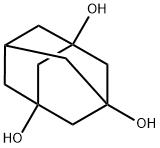
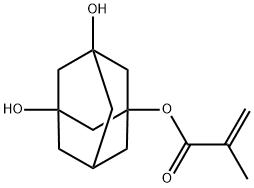
Application
The primary application of this compound is as a monomer for photoresist resins. Photoresists are light-sensitive materials used to transfer intricate circuit patterns onto semiconductor wafers.
1.ArF (193nm) and KrF (248nm) Lithography
As semiconductor nodes continue to shrink, the demand for resins with high transparency and structural integrity increases. This methacrylate monomer is often copolymerized with other monomers to form the "backbone" of the resist.
Dry Etch Resistance: The bulky phenyl and isopropyl groups provide a high carbon-to-hydrogen ratio, which significantly enhances the material's resistance to plasma etching during the pattern transfer process.
Photosensitivity Modulation: It helps in fine-tuning the solubility switch of the resist after exposure to UV light, ensuring high resolution and low line-edge roughness (LER).
2.Chemical Amplified Resists (CARs)
In modern lithography, this compound is used to create polymers that undergo a chemical change when exposed to light and heat. Its specific structure allows for precise control over the Glass Transition Temperature (TG) of the resulting polymer, preventing pattern collapse during the development stage.
Key Performance Characteristics
- High Thermal Stability: The aromatic structure ensures that the polymer can withstand the high-temperature baking cycles (Soft Bake and Post-Exposure Bake) without deforming.
- Adhesion Promotion: The methacrylate functional group provides excellent adhesion to silicon substrates and bottom anti-reflective coatings (BARC).
- Controlled Polarity: By incorporating this monomer, manufacturers can balance the hydrophobicity of the photoresist, which is crucial for achieving clean development in alkaline solutions (like TMAH).
Industrial Usage
Physical State:White powder solid
Purity(HPLC): >99.5%
Requirements:To avoid metal ion contamination
Storage:Store in a well closed container ,Store in a cool, dark area.
Conclusion
This compound (CAS 115522-15-1) is a vital component in the microelectronics supply chain. While many methacrylates find use in plastics or coatings, this specific derivative is engineered for the high-precision environment of cleanrooms, enabling the production of smaller, faster, and more efficient integrated circuits (ICs).
![1242906-47-3,2-Propenoic acid, 2-methyl-, 3,5-bis[(2,2,2-trifluoroacetyl)oxy]tricyclo[3.3.1.13,7]dec-1-yl ester](https://www.pudeepharm.com/wp-content/uploads/2026/05/473.jpg)