Product Description
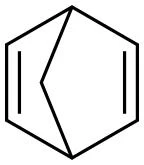
2,5-Norbornadiene (NBD) (CAS No. 121-46-0), is a bicyclic unsaturated hydrocarbon belonging to the class of strained cyclic dienes. Its systematic chemical name is bicyclo[2.2.1]hepta-2,5-diene. The compound is characterized by a rigid bicyclic molecular structure containing two carbon–carbon double bonds. This structural arrangement gives it distinctive chemical reactivity, making it a useful intermediate in organic synthesis, specialty chemical manufacturing, and advanced materials research.
2,5-Norbornadiene has attracted particular scientific interest because of its reversible photoisomerization into quadricyclane, a high-energy strained molecular structure. This transformation provides a foundation for research into molecular solar thermal energy storage (MOST) technologies.
In industrial and commercial contexts, norbornadiene is primarily relevant as a specialty chemical intermediate and research chemical. Its potential applications in advanced energy storage are promising.
Purity(GC): >99%
Appearance: Colorless liquid
Boiling point: Approximately 89–90°C
Density / specific gravity: Approximately 0.85–0.91 g/cm³
Flash point: Approximately -12 to -21°C
Water solubility: Insoluble
Refractive index: Approximately 1.47
Vapor pressure: 25.5 mmHg at 25°C
Autoignition temperature: Approximately 350°C
The chemical behavior of 2,5-norbornadiene is largely determined by its two carbon–carbon double bonds and rigid bicyclic framework.
Its important chemical characteristics include:
►Organic Synthesis and Chemical Intermediates
►Molecular Solar Thermal Energy Storage
Norbornadiene absorbs suitable light energy and converts into quadricyclane through photoinduced intramolecular [2+2] cycloaddition.and Quadricyclane returns to norbornadiene through a reverse reaction, releasing stored energy as heat.
This mechanism offers the possibility of storing solar energy in chemical bonds and releasing it when required.
►Synthetic Rubber and Polymer Chemistry
►Organometallic Chemistry and Ligand Applications
►Advanced Materials and Functional Molecular Systems