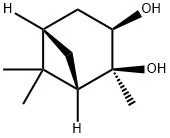
![Cas No.230299-17-9,Bis[(-)-pinanediolato]diboron](https://www.pudeepharm.com/wp-content/uploads/2021/03/230299-17-9.jpg)
Product Description
Bis[(-)-pinanediolato]diboron (CAS No. 230299-17-9) is a highly specialized, chiral organoboron reagent predominantly utilized in modern asymmetric organic synthesis. Possessing a dimeric boron core functionalized with optically active pinanediol chiral auxiliaries, this compound serves as a crucial stereodirecting borylation agent. It is structurally related to the ubiquitous achiral reagent Bis(pinacolato)diboron (B2pin2), but is explicitly engineered for the induction of stereoselectivity during the installation of boron functionalities.The unique performance of Bis[(-)-pinanediolato]diboron stems directly from its rigidly defined bicyclic structural framework derived from pinene.
IUPAC Name: (1R,2S,6R,8R)-2,9,9-trimethyl-4-[(1R,2S,6R,8R)-2,9,9-trimethyl-3,5-dioxa-4-boratricyclo[6.1.1.02,6]decan-4-yl]-3,5-dioxa-4-boratricyclo[6.1.1.02,6]decane
Purity: > 99.5%
Appearance: White crystalline powderapacity
Melting Point: 149–152 °C
Solubility: Soluble in common organic solvents such as toluene, THF,DCM etc. It exhibits poor solubility in water.
Annual capacity : 20 tons
Chemical Reactivity and Synthetic Uses
The primary function of Bis[(-)-pinanediolato]diboron is the stereoselective transfer of a boryl unit (-BR2) to organic substrates. The rigid steric bulk of the pinanediol ligand restricts the conformational flexibility of the transition state, driving highly diastereoselective or enantioselective transformations.
Asymmetric Miyaura Borylation
Unlike achiral diboron components, this reagent can engage in transition-metal-catalyzed (typically Palladium or Copper) asymmetric borylation of α,β-unsaturated carbonyls, alkenes, and alkynes. The reaction selectively introduces a chiral boronic ester moiety onto the substrate molecule.
Chiral α-Chloroalkane Functionalization (Matteson Homologation)
The compound is deployed in sophisticated Matteson-type chiral synthesis. By forming optically active pinanediol boronic esters, chemists can execute highly precise nucleophilic displacements. This allows for the iterative creation of chiral carbon centers with predictable configurations, often exceeding 99% enantiomeric excess (ee).
Functional Group Interconversion
The introduced chiral pinanediol boronic ester intermediates serve as versatile placeholders. They can be cleanly converted into a variety of other functional groups without racemization, including:
Alcohols: via oxidation (H2O2/NaOH).
Amines: via stereospecific amination protocols.
Alkyl/Aryl groups: via stereospecific Suzuki-Miyaura cross-coupling reactions.
Industrial Applications
In industrial chemical manufacturing, Bis[(-)-pinanediolato]diboron is a high-value fine chemical utilized primarily in target-oriented synthesis.
Pharmaceutical Manufacturing
The principal commercial application of this compound is as a chiral building block for active pharmaceutical ingredients (APIs). In particular, the synthesis of bortezomib (a proteasome inhibitor used to treat multiple myeloma) and other structurally related boronic acid therapeutics relies heavily on chiral organoboron chemistry. Utilizing a pre-resolved chiral diboron source significantly streamlines synthesis by eliminating the need for expensive chiral HPLC resolution steps in late-stage production.
Agrochemistry and Material Sciences
The reagent sees targeted application in the development of advanced crop protection agents and specialized optoelectronic materials requiring precise spatial arrangements or molecular helicity.
![Cas No.230299-05-5,Bis[(+)-pinanediolato]diboron](https://www.pudeepharm.com/wp-content/uploads/2021/03/230299-05-5.jpg)