
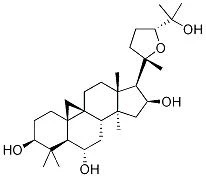
Product Description
Cycloastragenol (CAG) is a prominent, naturally occurring triterpenoid sapogenin predominantly derived from the hydrolysis of astragaloside IV, a major bioactive component of the medicinal plant Astragalus membranaceus. Characterized commercially and scientifically by its exceptional bioactivity, Cycloastragenol has garnered significant attention within the biotechnology, nutraceutical, and cosmetic industries due to its rare capacity to upregulate telomerase activity.
Chemical and Physical Properties
Cycloastragenol belongs to the cycloartane-type triterpene family. Structurally, it functions as the aglycone core of astragaloside IV, stripped of its sugar moieties through deglycosylation.
Molecular Profile
- IUPAC Name: (20R,24S)-20,24-Epoxy-9,19-cyclolanostane-3beta,6alpha,16beta,25-tetrol
- CAS Registry Number: 78574-94-4
- Molecular Formula: C30H50O5
- Molecular Weight: 490.72 g/mol
- Purity: >99.50% (HPLC).
- Apperance: white powder solid
Core Biological Mechanisms
The primary scientific interest in Cycloastragenol lies in its distinct pharmacological activity at the cellular level.
Telomerase Activation
Normal somatic cells face a finite replicative capacity (the Hayflick limit) driven by the progressive shortening of telomeres during each mitotic cycle. Cycloastragenol is one of the few recognized small-molecule compounds capable of transiently accelerating telomerase activity.
- The TERT Pathway: CAG upregulates the expression of Telomerase Reverse Transcriptase (TERT), the catalytic subunit of the ribonucleoprotein complex telomerase. TERT utilizes an RNA template to synthesize and append hexameric repeats (TTAGGG) to the terminal ends of linear chromosomes, maintaining chromosomal stability and postponing cellular senescence.
- Nuclear Translocation: CAG works synergistically with heat shock protein complexes (such as Hsp90) to assist in the nuclear localization of hTERT, allowing it to successfully access DNA targets.
Cellular Protection and Inflammatory Regulation
Beyond telomere elongation, CAG modulates critical downstream defense systems within cellular microenvironments:
- Oxidative Stress & Nrf2: CAG promotes the activation of Nuclear Factor Erythroid 2-Related Factor 2 (Nrf2), which upregulates cytoprotective and antioxidant enzymes, thereby quenching reactive oxygen species (ROS).
- NF-kappaB Inhibition: The compound targets upstream oxidative stress hubs to mitigate the nuclear translocation of Nuclear Factor Kappa B (NF-kappaB), effectively downregulating the transcription of pro-inflammatory cytokines such as IL-6 and TNF-alpha.
Commercial and Industrial Applications
Given its highly targeted cellular action, Cycloastragenol has been integrated into several consumer-facing and specialized industrial value chains.
Nutraceuticals and Dietary Supplements
Cycloastragenol is widely distributed globally as a premium anti-aging dietary supplement ingredient (often marketed under brand names like TA-65).
- Immune Cell Rejuvenation: Research indicates that CAG expands the proliferative capacity of human CD4+and CD8+ T-lymphocytes by delaying cellular senescence. This makes it an ingredient of choice for immune-defense formulas targeted at aging demographics.
- Bioavailability Challenges: Industrially, raw CAG undergoes first-pass hepatic metabolism and exhibits passive diffusion across the intestinal epithelium. Manufacturers frequently utilize specialized delivery systems (such as liposomal encapsulation or micronization) to maximize oral bioavailability.
Topical Cosmetics and Skincare
In the personal care sector, Cycloastragenol is incorporated into premium topical formulations aimed at skin rejuvenation and tissue recovery.
- Keratinocyte Proliferation: Studies have demonstrated that CAG stimulates cellular proliferation and accelerates scratch wound closure in human neonatal keratinocyte monolayers in vitro.
- Anti-Senescence Topicals: By maintaining local telomere length and shielding skin cells from high glucose-induced or UV-induced oxidative stress, it is utilized as an active compound in functional cosmetics designed to prevent premature skin thinning and barrier degradation.
Industrial Production
Extraction vs. Semi-Synthesis
While Cycloastragenol exists naturally in Astragalus membranaceus, its direct concentration in the plant tissue is remarkably low, rendering direct extraction economically inefficient for broad industrial supply.
Semi-Synthetic Manufacture: The standard industrial production method relies on extracting Astragaloside IV from root biomass, followed by targeted chemical or enzymatic cleavage of its sugar moieties. This deglycosylation isolates high-purity Cycloastragenol aglycone efficiently.