ZIF-8 is formed through coordination between Zn²⁺ centers and 2-methylimidazolate linkers. The metal–linker connectivity produces a three-dimensional porous framework with a zeolite-like topology. The strong Zn–imidazolate coordination contributes to the comparatively high thermal and chemical stability for a porous coordination material.
The framework contains interconnected microporous cavities. This combination of high internal surface area, molecular-scale pore openings and tunable surface chemistry is responsible for much of ZIF-8's technological interest.
ZIF-8 (CAS No.59061-53-9) is one of the best-established and most extensively investigated members of the ZIF family. Its combination of a zeolite-like porous architecture, high accessible surface area, molecular-sieving capability and comparatively strong framework stability makes it particularly relevant to adsorption, gas separation, membrane technology, sensing and heterogeneous catalysis.
Major Uses of ZIF-8
Gas adsorption and separation
Membranes
Catalysis and catalyst support
Chemical and environmental sensing
Adsorption of pollutants
Main Specification
BET surface area:>1190 m2 g-1
Total pore volume:>0.55 cm3 g-1
Pore-size distribution:<4 nm
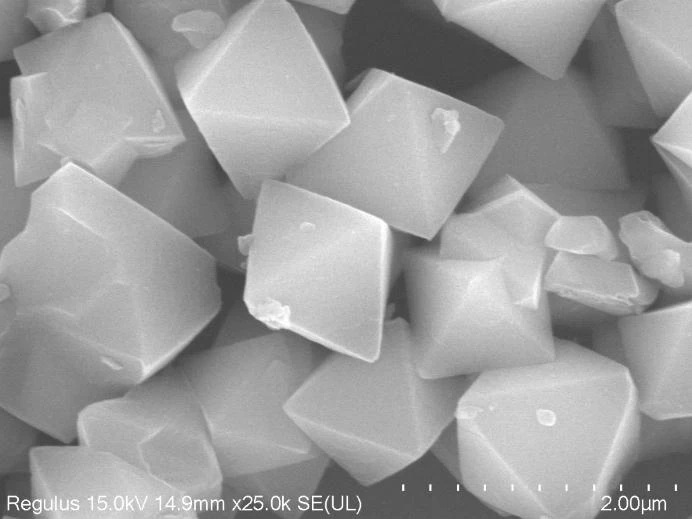
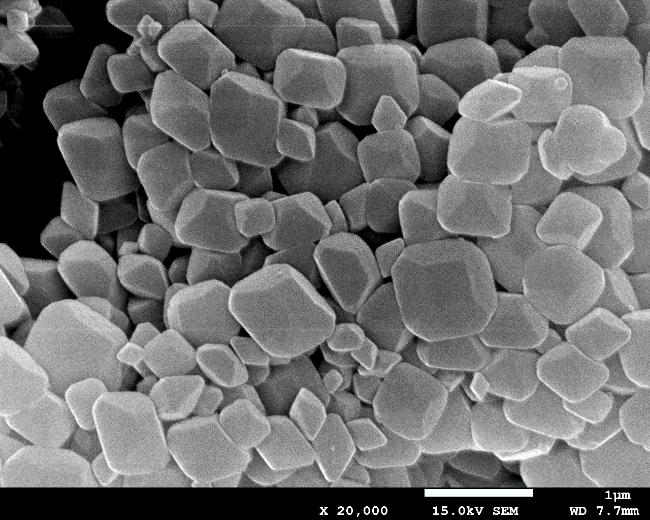
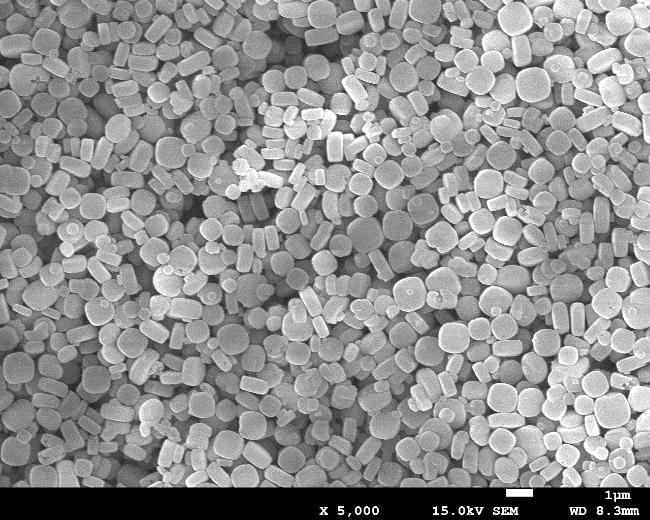
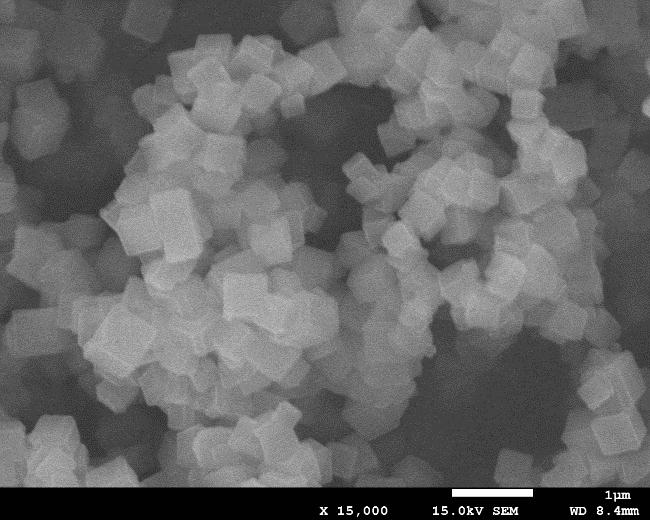
Particle size:300-600 nm(cubic shape)
PXRD is available
Product:MOF, ZIF-8, CAS No.59061-53-9