MIL-101(Cr) is constructed from trinuclear chromium(III) clusters linked by terephthalate (1,4-benzenedicarboxylate, BDC) ligands, producing a three-dimensional porous framework. Its combination of very high internal surface area, large cages, accessible metal sites, and relatively strong hydrothermal and chemical stability has made it one of the most extensively studied chromium-based MOFs.
MIL-101(Cr) is notable for its very high nitrogen-accessible surface area. Literature values vary substantially with synthesis, purification, activation and measurement methodology.
One of the major advantages of MIL-101(Cr) over many early MOFs is its relatively high hydrothermal and chemical stability. This property has supported research into aqueous adsorption, gas adsorption, catalysis and humidity-control applications.
MIL-101(Cr), CAS No. 869288-09-5, is a chromium-based metal–organic framework constructed from Cr(III) clusters and terephthalate linkers. Its large cages, very high surface area, accessible metal sites and relatively strong water/thermal stability make it one of the most important research materials in the MIL family.
The material has demonstrated significant potential in gas adsorption, CO₂ separation, water-vapor adsorption, dehumidification, adsorption cooling, catalysis and environmental remediation.
From an industrial perspective, however, the critical issues are no longer simply whether MIL-101(Cr) can be synthesized. The key questions are whether it can be produced economically at scale, shaped without losing porosity, regenerated repeatedly, integrated into process equipment, and operated with acceptable chromium and chemical-safety risks. Research into fluoride-free synthesis, scale-up and MOF-coated heat exchangers directly addresses these challenges.
Therefore, MIL-101(Cr) should currently be regarded as a high-performance MOF platform with substantial industrial application potential and demonstrated prototype/scale-up research, but with application-specific commercialization requirements still to be resolved.
Industrially Relevant Applications
Gas separation and CO₂ capture
Dehumidification and cooling
Heterogeneous catalysis
Environmental treatment
Adsorption-based thermal systems
Main Specification
BET surface area:>3253 m2 g-1
Total pore volume:>1.37 cm3 g-1
Pore-size distribution:1-3 nm
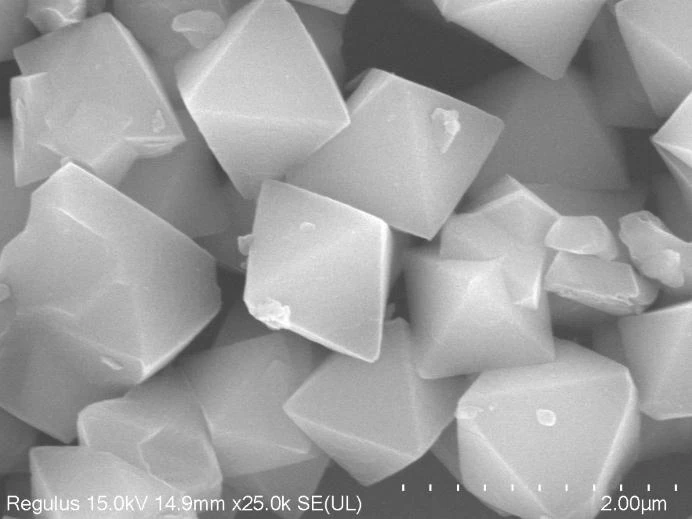
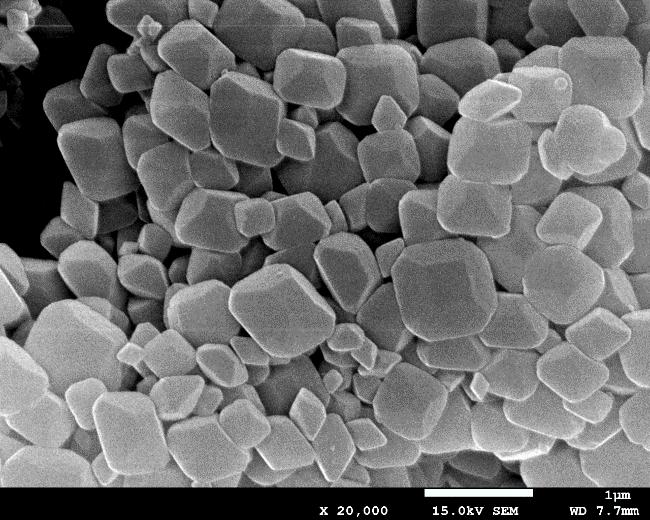
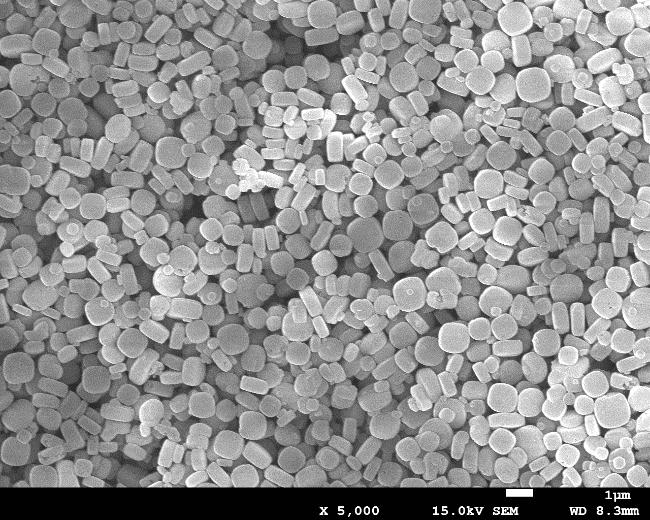
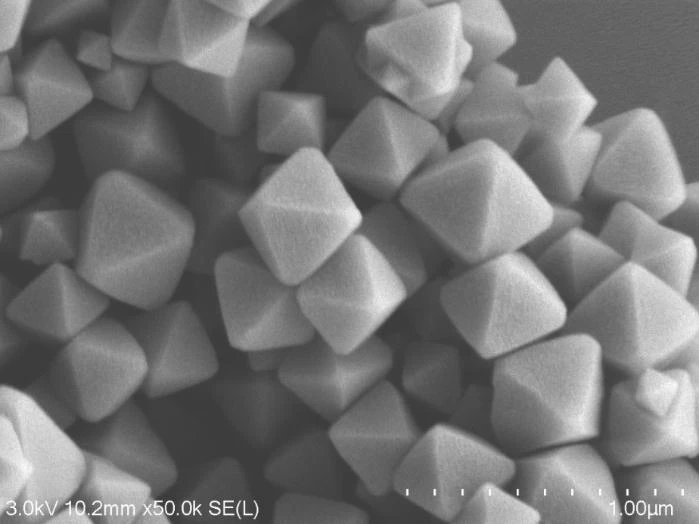
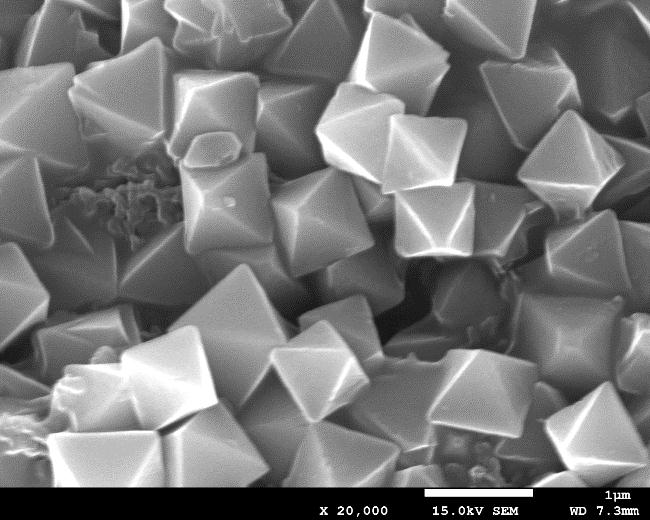
Particle size:1000-2000 nm(Octahedral)
Product: MIL-101(Cr).MOF, CAS No. 869288-09-5