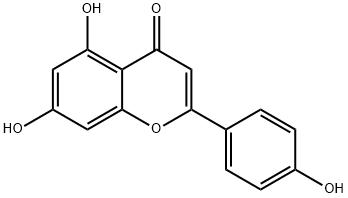
Apigenin is a prominent, naturally occurring polyphenolic monomer belonging to the flavone subclass of flavonoids. Widely distributed across the plant kingdom, it is found in high concentrations in commodities such as parsley, celery, chamomile, and citrus fruits. Due to its structural characteristics, low intrinsic toxicity, and versatile biological activities, apigenin has become a compound of significant commercial interest across the pharmaceutical, nutraceutical, and cosmetic industries. Chemically designated as 5,7-dihydroxy-2-(4-hydroxyphenyl)-4H-1-benzopyran-4-one (or 4',5,7-trihydroxyflavone), apigenin possesses a rigid, low-molecular-weight planar structure.
Solubility: Highly soluble in Dimethyl Sulfoxide (DMSO) at 27 g/L; highly soluble in hot ethanol and dilute aqueous alkaline solutions. Practically insoluble in water at neutral pH
Pharmacological Properties and Mechanisms of Action
Apigenin’s value in industrial and clinical development stems from its distinct biochemical interactions with mammalian cellular pathways:
Antioxidant Activity: It acts as a free radical scavenger and a potent upregulator of endogenous antioxidant enzyme systems, such as superoxide dismutase (SOD) and glutathione peroxidase (GPx), primarily mediated by the activation of the Nrf2/HO-1 signaling pathway .
Anti-Inflammatory Action: Apigenin suppresses the expression of pro-inflammatory cytokines (such as TNF-alpha and IL-6) and blocks cyclooxygenase-2 (COX-2) functioning by preventing the nuclear translocation of NF-kappaB.
Tumor Suppression and Cell Cycle Regulation: The molecule demonstrates anti-proliferative, anti-angiogenic, and pro-apoptotic effects in various cancer lines. It modulates crucial cellular cascades, including PI3K/Akt/mTOR, MAPK, and Wnt/beta-catenin, while inducing cell cycle arrest at the G1/S or G2/M phases.
Hepatoprotection and Metabolic Regulation: Preclinical models have highlighted apigenin's capability to mitigate non-alcoholic fatty liver disease (NAFLD), liver fibrosis, and acute toxic injuries by reducing lipid deposition and suppressing intracellular iron accumulation.
Industrial and Commercial Applications
Nutraceuticals and Dietary Supplements
Apigenin is highly commercialized as an active ingredient in dietary supplements aimed at stress reduction, sleep improvement, and metabolic support. This utilization relies on its ability to modulate central nervous system pathways (e.g., interacting with GABAergic systems) to alleviate insomnia and anxiety.
Pharmaceuticals
In drug development, apigenin serves as a scaffold for chemopreventive and therapeutic design. It is widely studied for its synergistic potential when co-administered with conventional chemotherapeutic agents (such as cisplatin, doxorubicin, and paclitaxel) to enhance efficacy and reduce drug-induced cardiotoxicity.
Cosmetics and Personal Care
Owing to its powerful anti-inflammatory and UV-protective attributes, apigenin is formulated into topical anti-aging creams, skin-soothing lotions, and sun protection matrices to mitigate oxidative stress and erythema.
Processing Challenges and Formulation Engineering
The primary bottleneck preventing wider clinical deployment of native apigenin is its Biopharmaceutics Classification System (BCS) Class II or IV tendencies—characterized by low aqueous solubility, slow metabolic excretion, and low oral bioavailability.
To bypass these limitations, modern chemical and industrial engineering utilizes advanced drug delivery systems (DDS) to enhance the molecule's dissolution profile:
Nano-formulations: Liposomes, polymeric nanoparticles, and solid lipid nanoparticles (SLNs).
Structural Modifications: Utilizing structural derivatives or preparing apigenin co-crystals.
Cyclodextrin Inclusion Complexes: Encapsulating the hydrophobic core to increase water dispersion.
Safety, Toxicity, and Regulatory Profile
Apigenin exhibits a favorable safety profile characterized by low intrinsic toxicity and non-mutagenic properties. Standard regulatory assessments report:
Mutagenicity (Ames Test): Verified as non-mutagenic and non-toxic when tested in standard Salmonella typhimurium strains. It has demonstrated clear anti-mutagenic effects, protecting cells against known genotoxins like sodium azide .
Hemocompatibility: In vitro hemolytic assays indicate that apigenin maintains hemolytic percentages well below the critical 5% threshold, establishing safety for potential systemic or intravenous delivery models.