Purity(HPLC): >99.5%
Annual Capacity: 300 mt
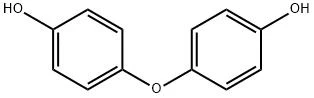
4,4'-Dihydroxydiphenyl ether, commonly referred to in industrial chemistry as 4,4'-oxydiphenol or bis(4-hydroxyphenyl) ether, is a specialized bifunctional aromatic compound. Characterized by two phenolic rings linked via a flexible ether bond, this structural architecture grants the molecule specific thermal and mechanical performance characteristics, positioning it as a critical building block in advanced polymer synthesis and material sciences. The presence of the central ether linkage (-O-) paired with terminal para-substituted hydroxyl (-OH) functional groups governs both the spatial conformation and chemical reactivity of 4,4'-dihydroxydiphenyl ether. The molecule features an activated aromatic system ready for nucleophilic substitution, condensation polymerization, and targeted functional group transformations.
Physical Properties
Appearance: White crystalline powder.
Melting Point: 169°C -170°C
Boiling Point: Approximately 380°C at 760 mmHg.
Solubility: Sparingly soluble to soluble in polar organic solvents such as dimethyl sulfoxide (DMSO), methanol, ethanol, and acetone; it possesses low solubility in water.
Stability: Chemically stable under recommended handling conditions and ambient temperatures. It is incompatible with strong oxidizing agents.
Core Industrial Applications
The primary industrial valuation of 4,4'-dihydroxydiphenyl ether lies in its utility as a high-performance monomer and chemical intermediate. Unlike rigid bisphenols, the central oxygen atom provides a structural "hinge," allowing polymers derived from it to maintain exceptional thermal thresholds while gaining enhanced structural flexibility and processability.
High-Performance Polymers and Resins
Epoxy Resins: Used as a curing agent or modified monomer step-growth component to formulate specialty epoxy resins. These epoxies are favored in electronics packaging and high-durability coatings due to their excellent mechanical strength, adhesion, and thermal stability.
Polymer Matrices & Polyesters: It functions as a diphenolic monomer in step-growth polymerization reactions to manufacture high-molecular-weight polyesters, polyethers, and polyetherimides (PEIs). These engineering plastics are critical for harsh environments requiring high heat resistance and electrical insulation properties.
Phenolic Resins: The twin para-hydroxyl configurations readily undergo polycondensation reactions with aldehydes, yielding customized cross-linked phenolic resin networks characterized by intrinsic flame retardancy and structural rigidity.
Fine Chemical Intermediates
Flame Retardants: Serves as a fundamental precursor in the synthesis of specialized halogen-free or organophosphorus flame retardant additives used in high-spec consumer plastics.
Agrochemical & Environmental Metabolites: In industrial biochemistry and agricultural tracking, the compound acts as a noted marker or transformation product (metabolite) for specific complex agrochemicals, such as the pesticide Fenoxycarb.
Product:4,4'-Dihydroxydiphenyl ether, DHDE, Cas No.1965-09-9, 4,4'-Oxydiphenol, Polymers